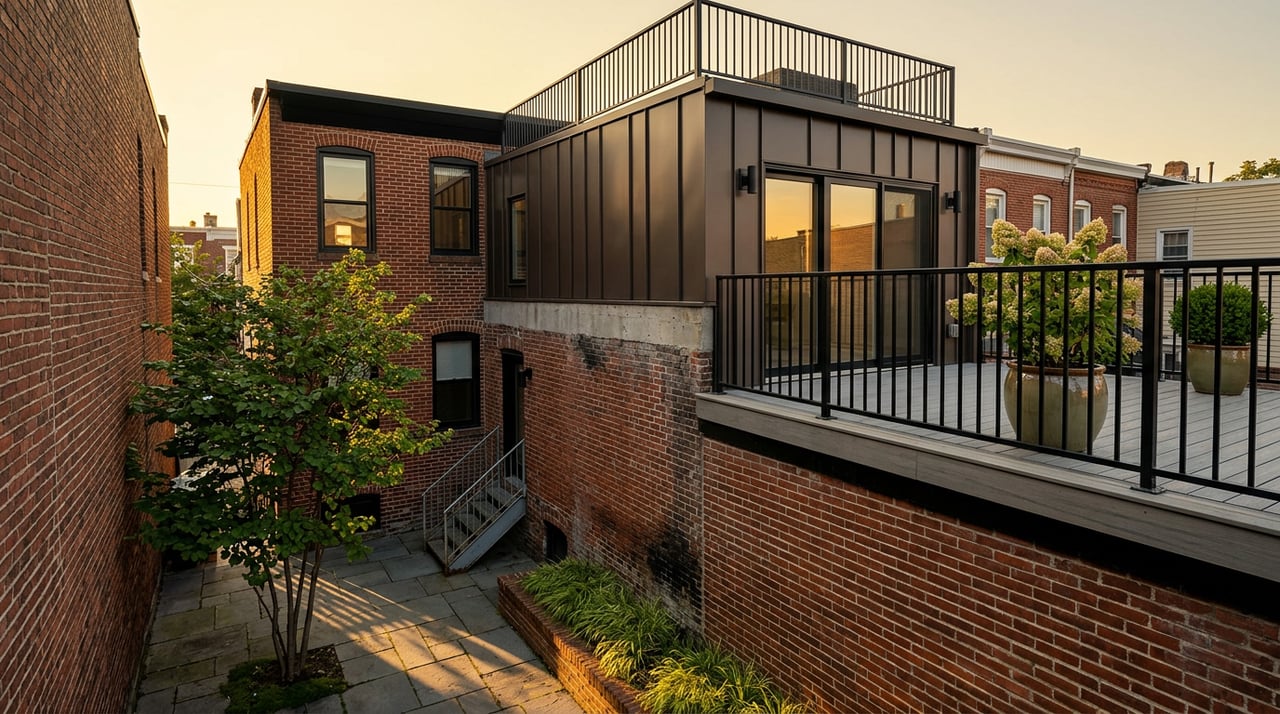
A buyer under contract on a Fishtown rowhome tells their contractor they want a rear addition and a roof deck. The contractor pulls the permit application, and Licenses and Inspections sends back a Notice of Refusal. Nobody panics. Everyone assumes there's a process, a few months, a hearing, a stamp. What most buyers don't budget for is that the permit refusal is the easy part. The process can extend beyond the initial permit application.
In Fishtown, a variance process can include review by the neighborhood association before the Zoning Board of Adjustment (ZBA) considers a case, and a ZBA decision may be appealed.
Why so many Fishtown projects need a variance at all
Fishtown's housing stock is dense rowhomes on narrow lots, most of them built decades before anyone was planning a rear kitchen bump-out or a roof deck. Adding a rear extension that eats into the required yard depth, adding a third floor that pushes past a district's height limit, or asking to skip an off-street parking requirement because there's nowhere to put a driveway are all common asks in this kind of neighborhood, and all of them typically require relief from the zoning code rather than a straightforward permit. Converting a two-family property to a three-family unit in a district that doesn't allow it, or adding a commercial use to a residential parcel, falls into the same bucket.
That matters right now because of where Fishtown's market actually is. A 2025-2026 review of the neighborhood's real estate found rowhomes remain the backbone of the local market, and buyer demand has stayed strong for wider new construction with tax abatement years still on the clock, alongside real appreciation for fully rehabbed historic rowhomes and properties with roof decks or well-designed patio space. In other words, the exact upgrades that command a premium in Fishtown right now, rear additions, roof decks, converted basements, are frequently the ones that trigger a variance. If you're pricing a renovation into your offer, you're probably also pricing in a zoning process, whether you've accounted for it or not.
How long zoning review may take
The city's own numbers, current as of the March 2026 Zoning Appeal Manual, put the wait for a regular ZBA hearing at about 180 days. Pay an accelerated hearing fee and that drops to roughly 140 days. At any given time the board typically has 600 to 650 appeals sitting in its hearing pipeline, which is the honest explanation for why the wait is measured in months rather than weeks.
Filing fees themselves aren't the expensive part. The real cost is time: a contractor on hold, a construction loan accruing interest, a closing pushed back while everyone waits for a hearing date.
The 180-day estimate covers the ZBA hearing wait, not every step in the review process.
Community review before a ZBA hearing
Before your case ever reaches the Zoning Board of Adjustment, Flagstone's Philadelphia zoning variance guide says Philadelphia law requires you to notify the Registered Community Organization for your area, and to do it at least 45 days before your hearing date. In Fishtown, that organization is the Fishtown Neighbors Association. Its Zoning Committee, currently chaired by Robert Everett, reviews incoming projects and runs Community Zoning Meetings on the first three Tuesdays of most months over Zoom, where verified residents vote on whether to support or oppose a project. That verified voter status stays active for a year once granted, which tells you this is a standing, organized process, not an informal drop-in.
The FNA's recommendation isn't legally binding on the Zoning Board. But it isn't nothing either, and the association's own recent history shows why. In 2021, a proposed restaurant and retail concept from the seltzer company Two Robbers, planned for Frankford Avenue and Shackamaxon Street, needed a variance. The FNA's Zoning Committee held a meeting, some members recused themselves, and the committee voted narrowly to oppose the project after hearing from residents concerned about parking and late-night noise. The Zoning Board of Adjustment approved the variance anyway. A group of neighbors, unhappy with both the board's decision and what they saw as a lukewarm opposition from the FNA itself, hired a lawyer and pursued an appeal to overturn it.
The 2021 case illustrates that a ZBA approval may be followed by an appeal. Under Pennsylvania process, a ZBA decision can be appealed to the Court of Common Pleas within 30 days. The FNA review and residents' response are part of the local context for a zoning project.
A different case from the same area illustrates a less contentious review: in 2025, a proposed four-home infill project off Shackamaxon and Wildey Streets needed relief for density, height, lot coverage, and likely parking because the site was zoned for single-family use. It moved through the FNA's review without the same friction. The examples show that projects may receive different responses under the same review process.
What this means before you write a renovation contract
If you're buying in Fishtown with plans to add a floor, extend the rear, or convert a use, the practical takeaway isn't that variances are impossible. Your timeline includes the official ZBA hearing wait, currently around 180 days for a standard hearing, as well as review by the FNA's Zoning Committee and residents who show up to vote. The timing and response may vary by project, and an appeal may follow a hearing.
Before you go under contract with renovation plans that depend on a variance, it's worth finding out whether anything similar has come before the FNA's Zoning Committee recently, and how that vote went. The FNA's zoning page posts upcoming meeting dates and, where available, the Notice of Refusal and renderings for pending projects, which gives you a read on what's currently in front of the committee. The city's Zoning Appeal Manual lays out the filing steps and current wait times directly.
FAQ
Does every renovation in Fishtown need a zoning variance? No. Projects that comply with the existing zoning code can get a permit by right, with no ZBA hearing required. The variance process only applies when a project doesn't conform to the code as written, which in Fishtown tends to happen with rear additions, height increases, parking waivers, and use changes given how tightly built the neighborhood already is.
What happens if the FNA votes against my project? The FNA's recommendation is not legally binding on the Zoning Board of Adjustment, which can and has approved variances the association opposed. But an unfavorable vote signals organized community opposition, which can extend your timeline if opponents show up at the hearing or pursue an appeal afterward, as happened with the Two Robbers case.
Is paying for an accelerated hearing worth it? As of the city's March 2026 manual, an accelerated hearing shortens the wait from roughly 180 days to about 140, a difference of roughly a month and a half. Whether that's worth it depends on what's riding on your timeline, a construction loan, a closing date, or a contractor's schedule you don't want to lose.
Renovation plans and zoning timelines can make or break a deal before it ever gets to closing, and that's exactly the kind of detail worth working through with someone who watches this neighborhood closely. Hernan Alvarado Jr works with Fishtown buyers, sellers, and investors who want a clear picture of what a property actually allows before they commit to it. Let's Connect.
This article is general information, not legal, tax or financial advice. Consult a qualified professional about your situation.