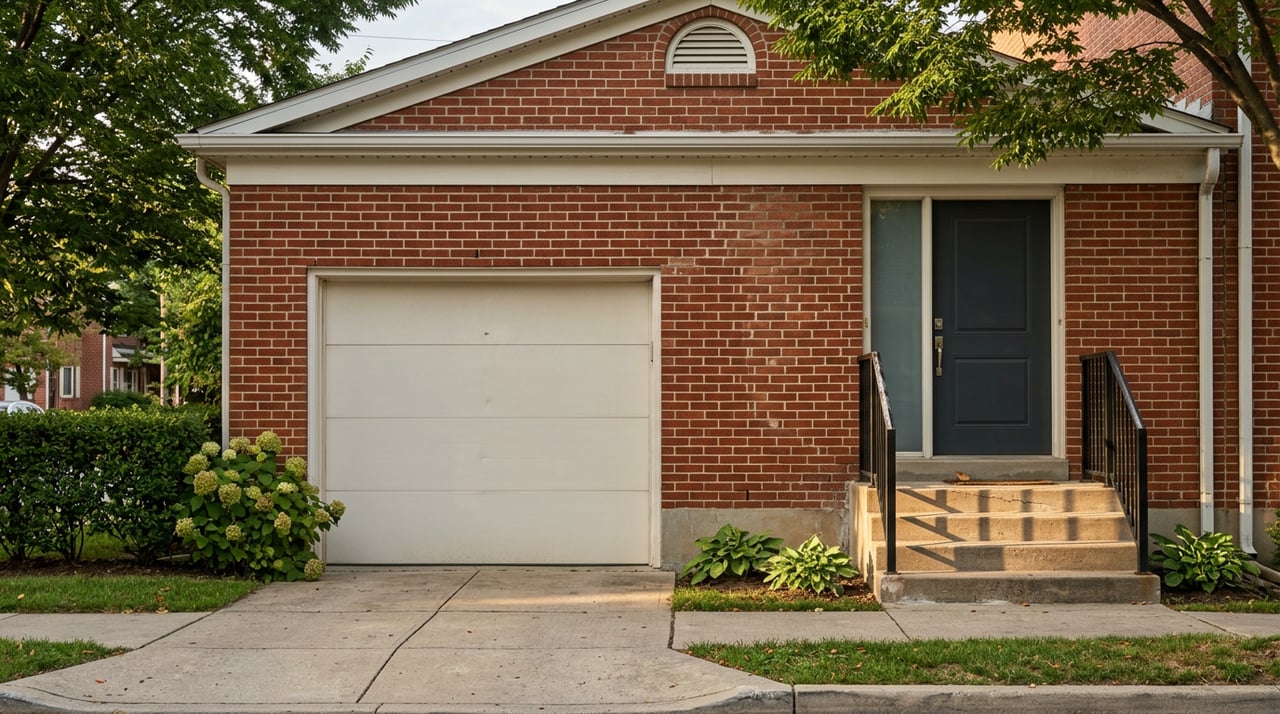
A buyer touring a brick row on one of Parkwood's curving streets tends to relax a little when they hear the build date. Nineteen sixty, nineteen sixty-two. Not a century-old South Philly trinity with plaster walls and a coal chute someone converted twice. A newer house, in Philadelphia terms, reads as a safer house.
That instinct is only part of the picture: homes from this era have their own systems worth checking. Parkwood's entire original housing stock was developed between 1960 and 1962 by the Korman Corporation as a planned community called Parkwood Manor, and the predominant home type across those blocks is the brick row house, according to Wikipedia's history of the neighborhood. That build window is distinct from the pre-1940 period associated here with knob-and-tube wiring. The discussion below looks at how the era shapes the inspection questions.
A Different Decade, A Different Punch List
Knob-and-tube wiring, the ungrounded system that makes older Philly listings a little scarier to insure, is a pre-1940 issue. Parkwood misses it entirely. But home inspectors who work this specific era of housing point to a different set of systems that show up instead, and they show up because of the same build date that buyers here treat as reassuring.
Galvanized steel supply piping is common in homes built between the 1940s and the 1960s, which covers Parkwood's original plumbing directly rather than as an outlier. Aluminum branch wiring became common in homes that were updated during the 1960s and 70s, a window every Parkwood row has now had six decades to pass through at least once. And any home built before 1970 that burned oil for heat at any point is a candidate for an underground storage tank that may never have been logged anywhere. Parkwood's entire original stock sits inside that 1970 line, not near it.
Here are four systems and conditions to discuss with an inspector when evaluating a Parkwood rowhome:
| System | Why it shows up in Parkwood specifically | What to do about it |
|---|---|---|
| Galvanized supply piping | Original to homes built in the 1940s-1960s window, which includes Parkwood's entire construction era | Confirm pipe material and current condition with your inspector before waiving a plumbing contingency |
| Aluminum branch wiring | Common in homes updated during the 1960s-70s, a period every 60-plus-year-old row has likely passed through | Ask your insurer directly how they underwrite aluminum wiring before you finalize financing |
| Undocumented underground oil tank | Any home built before 1970 that used oil heat at any point is a candidate, and According to the Philadelphia underground oil tank guide, small residential tanks were historically exempt from state registration | Request written tank documentation, and if none exists, order a sweep before your strongest offer |
| Shared sewer lateral | Attached rowhome construction often splits one lateral run between two or three homes before it reaches the street main | Get a camera scope during your inspection period and ask specifically whether the line is shared |
These four considerations are not unique to Parkwood. The neighborhood's shared construction era and attached-home layout make them useful inspection topics, although the specific systems present can vary from home to home.
Understanding the Tank Question on Seller Disclosure Forms
Pennsylvania's Real Estate Seller Disclosure Law requires sellers to disclose known material defects, and the standard form asks directly whether the seller is aware of underground tanks or hazardous substances on the property, along with a separate question about underground fuel tanks tied to the heating system section, as laid out in the official disclosure statement language. The form records what a seller knows; it may not establish whether a tank remains underground.
Residential heating oil tanks were historically exempt from the state registration requirements that applied to commercial underground storage tanks. A seller who checks "no" or "unknown" on the tank question is often telling the truth about what they know, not making a guarantee about what's actually in the ground. For any Parkwood home that predates 1970, and by definition that's the original core of the neighborhood, a magnetometry tank sweep runs roughly $250 to $500 and is worth commissioning before you make your strongest offer rather than waiting to see what surfaces during the inspection period.
The reason this matters more here than in a lot of Philadelphia guides written for older rowhome stock is timing. A pre-1940 South Philly trinity has typically changed hands three or four times in a century, and each sale forces the tank question back onto the table. Parkwood's post-war rows are only now reaching the point where second- and third-generation owners are selling for the first time, which means a fair number of original systems have simply never been asked about.
Who Pays When the Pipe Under the Sidewalk Fails
Attached housing carries its own separate friction point that has nothing to do with build year. According to ValueGuard Inspections, Philadelphia holds homeowners responsible for the entire length of their sewer lateral, from the house to the point it connects with the city main under the street, not just the portion that sits on private property. On a block of rowhomes, that lateral is frequently shared. Two or three attached homes commonly run into a single line before it reaches the main, which means a collapse anywhere along that shared run becomes a cost split between neighbors rather than a bill one owner pays alone.
Camera inspection of the lateral runs roughly $125 to $500 and is one of the cheaper five-figure decisions a buyer can make before closing. Full replacement costs vary by access. Homes with clear rear yard access typically run $4,600 to $12,000. Front sidewalk excavation, which requires permits and street restoration, runs $6,000 to $15,000 or more. Shared alley access with more complicated logistics can push costs to $10,000 to $28,750 or higher, according to a 2026 sewer line repair cost guide for the Philadelphia market. On a row of attached homes built to share infrastructure, knowing whether your lateral is shared and with whom is not a curiosity question. It's a negotiation question.
What This Means Before You Write or Accept an Offer
For buyers working through a Parkwood contract, the practical sequence looks like this:
- Ask the seller in writing for any documentation of tank removal, abandonment, or a gas heating conversion, and treat "not aware" as a starting point rather than an answer.
- If no documentation exists, order a tank sweep before your offer deadline, not during attorney review after you're already emotionally committed to the house.
- Confirm with your lender and insurer how they treat aluminum wiring if your inspector finds it, since financing and coverage decisions can move faster than a renegotiation.
- Request a camera scope of the sewer lateral during your inspection window and ask specifically whether it's a shared line, since that single fact changes who you'd be negotiating with if something fails later.
For sellers, the same information works in the opposite direction. A seller who pulls together tank paperwork, a plumbing scope, or an electrician's letter before listing removes the single biggest source of delay in a Parkwood sale, which is a buyer's attorney discovering an open question during review that nobody addressed up front. That kind of preparation tends to shorten the path to a clean closing rather than a renegotiated one.
Common Questions
Does every Parkwood rowhome have a buried oil tank? No. Some homes converted to gas heat decades ago and have documentation to prove it. The issue is that a lack of documentation is common, so "no tank" and "no record of a tank" aren't the same statement.
Is aluminum wiring an automatic dealbreaker? Not automatically. Electricians who work on this housing stock typically resolve it with specialized connectors at each outlet or, in some cases, a full rewire, depending on condition. Ask your insurer how they treat it before you assume either outcome, since practices vary by carrier.
If my neighbor's portion of a shared lateral fails, do I pay? It depends on where the failure sits and how the shared line was originally installed. This is exactly why a camera scope before closing matters. Knowing the answer before you own the house is far less expensive than finding out after a backup.
Should sellers order these inspections before listing? It's optional, but a seller who does the tank check, the plumbing review, or an electrical assessment ahead of time enters negotiations from a position of documentation rather than defense, which tends to move deals faster.
Parkwood's brick rows earned their reputation as a solid, well-established starting point in Northeast Philadelphia, and that reputation holds up. The build date that makes these homes feel newer than the city's oldest rowhome stock just happens to be the exact window that carries its own specific set of systems worth checking, not fewer of them. Whether you're buying your first home here, selling one that's been in the family since the Korman era, or evaluating a Parkwood row as an income property, the difference between a smooth closing and a stalled one usually comes down to which questions got asked before the offer instead of after.
If you're weighing a purchase or sale in Parkwood and want someone who knows exactly which questions apply to this specific stretch of Northeast Philadelphia, Hernan Alvarado Jr can walk through what your particular block and build year are likely to carry before you're locked into a timeline. Let's Connect.
This article is general information, not legal, tax or financial advice. Consult a qualified professional about your situation.